
BookstorE BLOG
Books enchant, captivate, entertain, fascinate, educate, relax, and inspire.
Truly…is there anything a book cannot do?!
But with a new book published every thirty seconds, how do you choose?
Let me help you.
I’m busy finishing my first novel. But if I find a minute, I will select a book, or two. And then I will write up a review.
Primarily I’ll focus on works of fiction, contemporary reads as well as the classics; however, my choices may also include poetry, philosophy, creative nonfiction, memoir, and biography.

I love Victorian ghost stories because they embody one of my favorite storytelling elements–the past haunting the present. In addition, the function of most Victorian ghost stories was to produce the pleasurable shudder, another of my favorite things.

"Halfway down a bystreet of one of our New England towns stands a rusty wooden house, with seven acutely peaked gables, facing towards various points of the compass, and a huge, clustered chimney in the midst. The street is Pyncheon Street; the house is the old Pyncheon House; and an elm tree, of wide circumference, rooted before the door, is familiar to every town-born child by the title of the Pyncheon Elm." Nathaniel Hawthorne’s Gothic classic, The House of The Seven Gables, combines my favorite storytelling elements and reads like a Dickens or Hardy novel. And it warns: Beware of the Sins of Your Forefathers

Many people are interested in mythology, yet often they consider these stories as nothing more than entertaining tales from a bygone era. If one really wants to understand the importance of myth, in a modern context, just watch a movie, look at your calendar, fall in love, or ponder the mysteries of life and death. Myths permeate our language, our ethics, and our ideas about human connections; they are constantly recycled in the books we read and the films we watch.

This is a fantastic read to curl up with beside a warm fire on these dark winter nights. It’s a good, slow read, one you’ll really want to wallow in. And if you’re anything like me, and you love the work of the Bronte sisters, as well as a dark and gothic tale, you’ll enjoy The Distant Hours by Kate Morton.
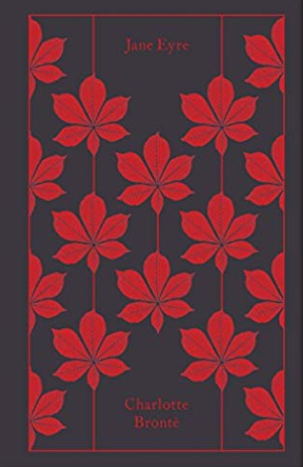
It’s highly unlikely a person will make it through life with their heart in one piece. Heartbreak is inevitable. Indeed, literature is replete with heartbreak, all due to failed romance, death, or betrayal. But at the same time it reminds us that broken hearts can mend. Charlotte Brontë’s Jane Eyre depicts lost yet redeemable love, which refuses to give up.

Many claim Charles Dickens invented Christmas. And there’s a reason why. Click on the link for my full review.

This collection of tales transports the reader to a time when staircases creaked in old manor houses, and a candle could be blown out by a gust of wind, or by a passing ghost.
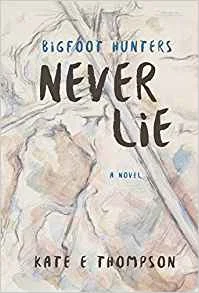
“We have an oath.” She pulls me into a tight hug and for the first time in hours, I feel like I’m going to be okay.”
“Bigfoot Hunters forever,” I say the same time she does.

Similar to Celtic mythology, Native American myths are well-stocked with enduring beliefs and traditions.

This book offers an imaginative visual reconstruction to the houses that played critical roles in beloved children’s classics, such as The Secret Garden by Frances Hodgson Burnett, Charlotte’s Web by E.B. White, and Lewis Carroll’s Alice in Wonderland.

Wide Sargasso Sea tells the story of Mr. Rochester’s first wife, Antoinette Cosway Mason
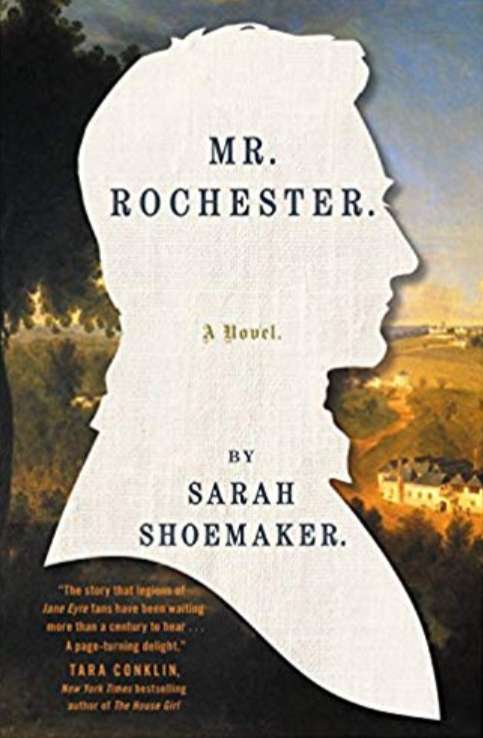
A review on the back of the book reads: “If you’ve ever wondered about the backstory of the man who Jane eventually teaches to love again, Mr. Rochester is officially wish fulfillment.” This is Edward Fairfax Rochester’s story, as told from his point of view.

Mr. Emerson’s Wife is a creative examination of the “rumored” relationship between Thoreau and Ralph Waldo Emerson’s wife, Lidian.

Henry David Thoreau is the giant of American nature writing, known for his masterpiece, Walden. But he wrote so much more. And this book includes all his significant works.

Things do not go as planned for the novel’s protagonist, Pip, in his quest to rise socially. And since this is a Dickens novel, rest assured, there are lessons to be learned.

Romance, passion, vengeance. Wuthering Heights has it all. And there’s a reason it has not been out of print in over one-hundred and seventy years.

Reading this book is like having your own personal tour of ten famous houses in literature, such as: Rebecca’s Manderley, Great Expectations’s Satis House and Jane Eyre’s Thornfield Hall.
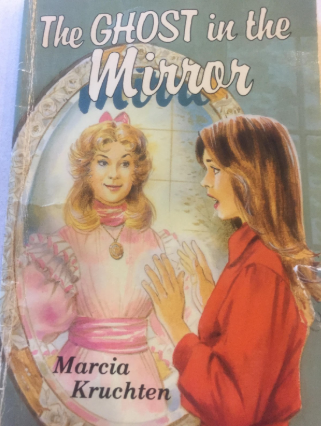
This book contains three of my favorite storytelling elements: Settings with Atmosphere, Houses as Characters, The Past Haunting the Present


Annalece Hunter
I craft stories full of romance, mystery, history, a touch of something otherworldly, and a penchant for the Gothic Tale.

Beston felt that “the world today is sick to its thin blood for lack of elemental things.” This statement, penned almost one-hundred years ago, I believe, holds true today. This classic of American nature writing highlights our need for nature, in its most wild and pure.
I love Victorian ghost stories because they embody one of my favorite storytelling elements–the past haunting the present. In addition, the function of most Victorian ghost stories was to produce the pleasurable shudder, another of my favorite things.
"Halfway down a bystreet of one of our New England towns stands a rusty wooden house, with seven acutely peaked gables, facing towards various points of the compass, and a huge, clustered chimney in the midst. The street is Pyncheon Street; the house is the old Pyncheon House; and an elm tree, of wide circumference, rooted before the door, is familiar to every town-born child by the title of the Pyncheon Elm." Nathaniel Hawthorne’s Gothic classic, The House of The Seven Gables, combines my favorite storytelling elements and reads like a Dickens or Hardy novel. And it warns: Beware of the Sins of Your Forefathers

I love stories with moody settings. Beston’s lyrical writing in The Outermost House captures seasonal changes and sensory details with such beauty. In fact, he even called himself the “poet of the landscape.”

“The Story of the Goblins Who Stole a Sexton” was published as part of Dickens’s series The Pickwick Papers and written seven years before A Christmas Carol.

Maybe it’s the way the heavy clouds have blanketed the mountain with warmth that brings to mind a passage from a collection of beloved Victorian ghost stories.

Earlier this fall, I spent some time in New England. My tour began in Salem, Massachusetts, an absolutely charming place: historical, quaint, rational. Yet simmering not far beneath the surface was something a little more curious.

When my Victorian ancestors crossed the ocean, I like to imagine that their trunks were not only filled with their earthly possessions, but also stowaways–English faeries, Irish banshees, and Scottish selkies. And concerning my Renaissance ancestors, their motto was “Droit et Loyal” meaning “Just and Loyal.” Do you know who they were?
Beston felt that “the world today is sick to its thin blood for lack of elemental things.” This statement, penned almost one-hundred years ago, I believe, holds true today. This classic of American nature writing highlights our need for nature, in its most wild and pure.